AdSense for Feeds
In May 2005, Google announced a limited-participation beta version of AdSense for Feeds, a version of AdSense that runs on RSS and Atom feeds that have more than 100 active subscribers. According to the Official Google Blog, "advertisers have their ads placed in the most appropriate feed articles; publishers are paid for their original content; readers see relevant advertising—and in the long run, more quality feeds to choose from."[8]AdSense for Feeds works by inserting images into a feed. When the image is displayed by a RSS reader or Web browser, Google writes the advertising content into the image that it returns. The advertisement content is chosen based on the content of the feed surrounding the image. When the user clicks the image, he or she is redirected to the advertiser's website in the same way as regular AdSense advertisements.
AdSense for Feeds remained in its beta state until August 15, 2008, when it became available to all AdSense users.
AdSense for search
A companion to the regular AdSense program, AdSense for search, allows website owners to place Google Custom Search boxes on their websites. When a user searches the Internet or the website with the search box, Google shares 51% of the advertising revenue it makes from those searches with the website owner. However the publisher is paid only if the advertisements on the page are clicked; AdSense does not pay publishers for regular searches. Web publishers have reported that they also pay a range from $0.64 to $0.88 per click.AdSense for mobile content
AdSense for mobile content allows publishers to generate earnings from their mobile websites using targeted Google advertisements. Just like AdSense for content, Google matches advertisements to the content of a website — in this case, a mobile website. Instead of traditional JavaScript code, technologies such as PHP, ASP and others are used.AdSense for domains
AdSense for domains allows advertisements to be placed on domain names that have not been developed. This offers domain name owners a way to monetize domain names that are otherwise dormant or not in use. AdSense for domains is currently being offered to all AdSense publishers, but it wasn't always available to all.On December 12, 2008, TechCrunch reported that AdSense for Domains is available for all US publishers.


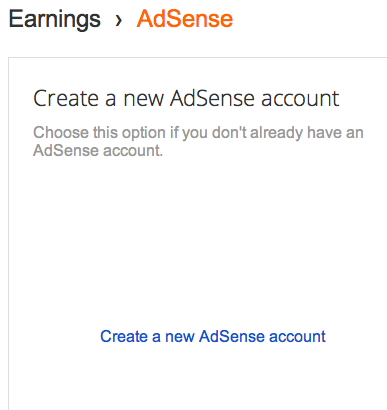
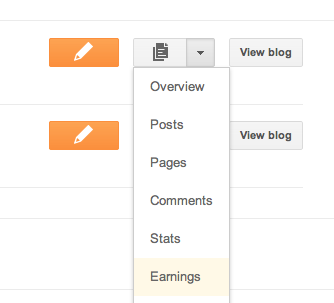 If you haven't signed up for AdSense yet, click the link to create a new account.
  You'll then fill out a form with your contact information, review the
information you've provided, and then agree to terms and conditions.
You'll then fill out a form with your contact information, review the
information you've provided, and then agree to terms and conditions.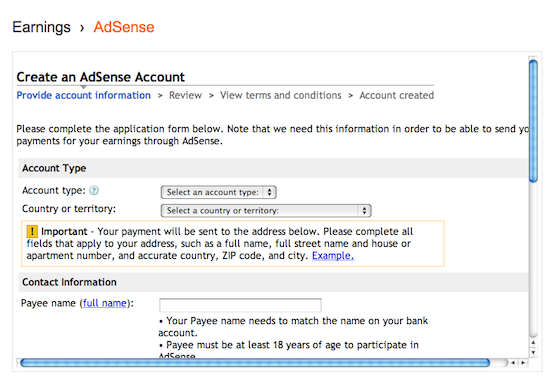 Before ads start showing up, you'll have to wait for your account to
be approved. You can control the ways the ads show up on your blog
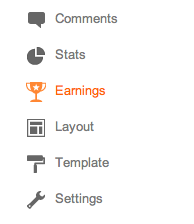
through the settings on the Earnings tab at anytime.
You can choose whether or not to show ads, and where on your blog to
display those ads (sidebar and posts, just sidebar, or just posts).
Before ads start showing up, you'll have to wait for your account to
be approved. You can control the ways the ads show up on your blog
through the settings on the Earnings tab at anytime.
You can choose whether or not to show ads, and where on your blog to
display those ads (sidebar and posts, just sidebar, or just posts).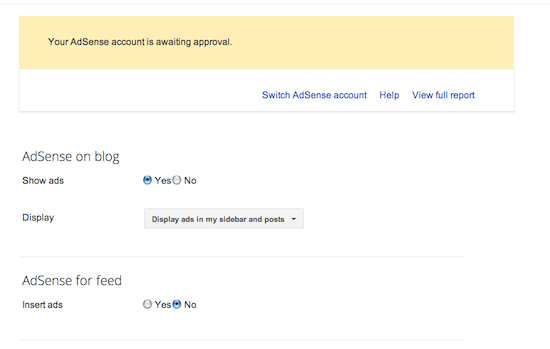
 AdSense Report
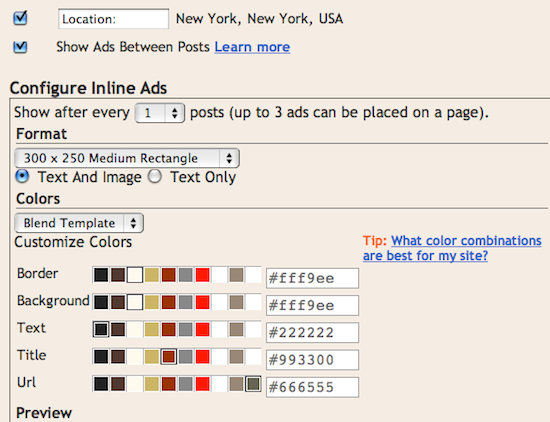
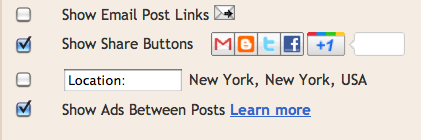 Once you check this box you'll see the configuration options for your
ads. You can then select how often you would like ads to be shown after
your posts.
Once you check this box you'll see the configuration options for your
ads. You can then select how often you would like ads to be shown after
your posts.